
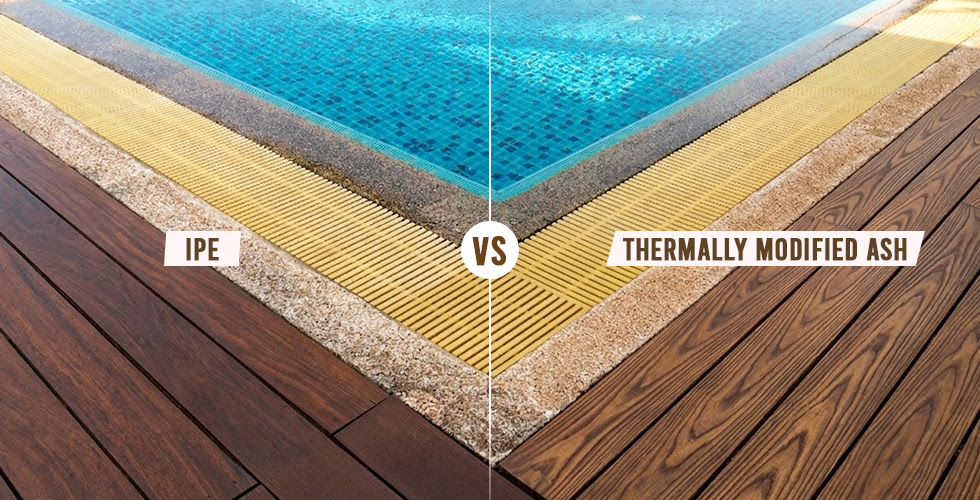
The decking material choice for a pool surround is almost never a quick one. Ipe and thermally modified ash hold up well in wet outdoor conditions, which is the problem. When two materials are this evenly matched on durability, it gets much harder to go with just one. Pool decks are pretty brutal on lumber. Between the non-stop splash cycles, intense UV exposure, chlorine or salt contact and heavy barefoot traffic, every little weakness that a board has will eventually show up. Picking the wrong species means warped boards, splinters or early rot within just a few years - and on a project that should last decades, that's a very expensive lesson to learn.
What makes this comparison a little tough is that each one of these woods has a very strong track record for outdoor use. Ipe is one of the densest hardwoods that you'll find anywhere in the world, and its natural resistance to rot, insects, and moisture has made it a first choice for commercial boardwalks and high-end residential builds for decades. Thermally modified ash goes through a high-heat treatment that pulls the sugars and moisture out of the wood, a process that dramatically cuts down on its tendency to swell, shrink or decay over time.
At its core, this whole choice can depend on how well each wood's strengths line up with what actually matters to you. Moisture resistance, surface safety for wet bare feet, ethical sourcing, finish needs and your budget don't all point in the same direction - and which one carries the most weight will depend on where you live, how your pool gets used and what you're willing to work with over the years. They're both options in the right context. In my experience, the wrong pick usually traces back to that last step - the material just wasn't matched to the situation.
Here's a full look at each material so you can choose the perfect pool deck!
Why the Right Wood Makes a Difference
Pool decks are one of the worst places that you can put wood. The surface deals with non-stop water exposure, full direct sun all day and either chlorine or saltwater on top of all that. The wet barefoot traffic from climbing in and out can add even more wear. That combination will break down most lumber much faster.
A pool deck gets soaked and dries back out, gets soaked again and just repeats that same pattern all summer long. That repetitive stress wears on the wood's structure in ways that most other outdoor projects never see.
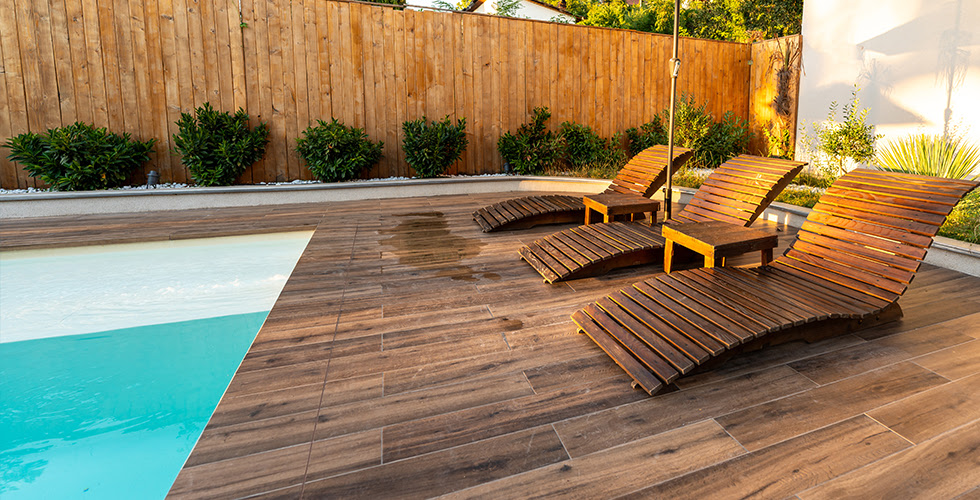
The wrong material will show itself pretty quickly. Warped wood leaves an uneven surface, and splinters become a hazard once the wood starts to break down - not what anyone wants around bare feet and small kids. A deck in bad enough shape can need a full replacement within just a few years - it's a rough outcome for something that was supposed to last a decade or more.
UV exposure is the other concern. Direct sun fades and dries out the wood over time, which speeds up cracking and surface wear. Add in the chemical exposure from pool water, and your material now has to hold up against two very different types of stress at the same time. A board that works just fine on a covered porch can struggle once it's placed next to a pool.
How Each Wood Holds Up to Water
Pool decks take a beating. Boards get splashed, soaked and dried out again - maybe even hundreds of times in a single season. That repeated wet-dry cycle is brutal on the wood, and it's a big part of why your choice of lumber matters quite a bit more here than it would for a standard backyard deck.
Thermally modified ash has a benefit here. During heat treatment, the wood gets exposed to temperatures above 400°F, which burn off the natural sugars inside it - the ones that would otherwise pull moisture in from the air. With those sugars gone, it'll swell and shrink quite a bit less over time, since the wood just doesn't absorb as much moisture. The end result is boards that stay flatter for much longer, with gaps that hold their spacing far more reliably.
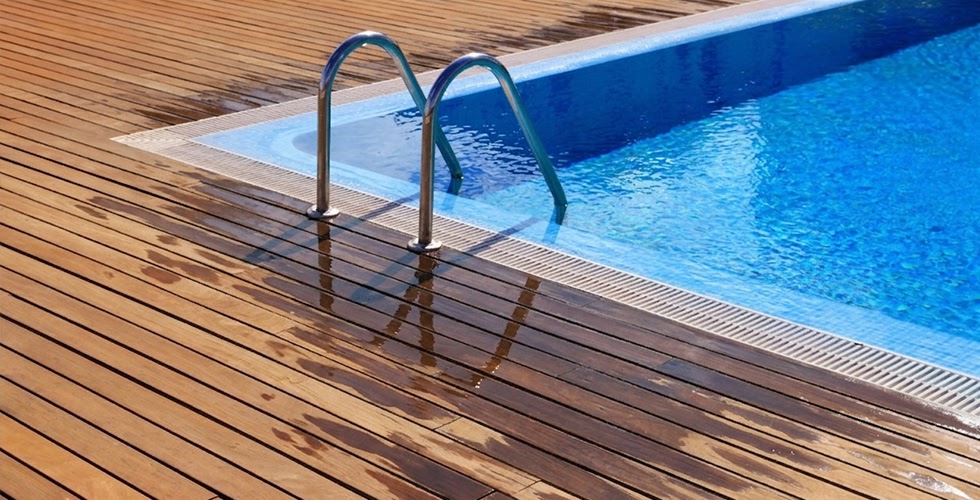
Ipe holds up quite well to moisture, too, though the reason why is pretty different from what thermal modification does. The wood is so dense that water has a very hard time penetrating it at all. That said, density alone doesn't stop the wood from moving the way that thermal modification does. Ipe boards can still cup or twist a bit as humidity levels and water exposure change throughout the year.
Each one of these woods performs well on a pool deck. But how each gets there deserves a look. Thermally modified ash is stable from the inside out - as heat treatment changes the wood at a molecular level. Ipe takes a different path - its natural density is what holds the water out.
Which One is Harder and Safer Underfoot
Ipe is one of the hardest woods available for outdoor decking - and by a wide margin. Its Janka hardness rating sits at around 3,680 lbf, which puts it well above most other decking materials that you'll find on the market. To give you a sense of that, some dragged patio furniture, dropped tools, and even years of heavy foot traffic are all very unlikely to leave any mark on the surface.
Ipe's density actually works in your favor here - a well-finished ipe deck is very smooth, and it holds onto that smoothness for a long time with minimal wear. As deck materials go, it's one of the more forgiving options out there.
Thermally modified ash sits a fair bit lower on the hardness scale, with a Janka rating anywhere from 1,200 to 1,500 lbf - which is a large difference between the two materials. That said, it's not a fragile material by any stretch. Under normal residential foot traffic, thermally modified ash holds up well and will almost never give homeowners any problems.
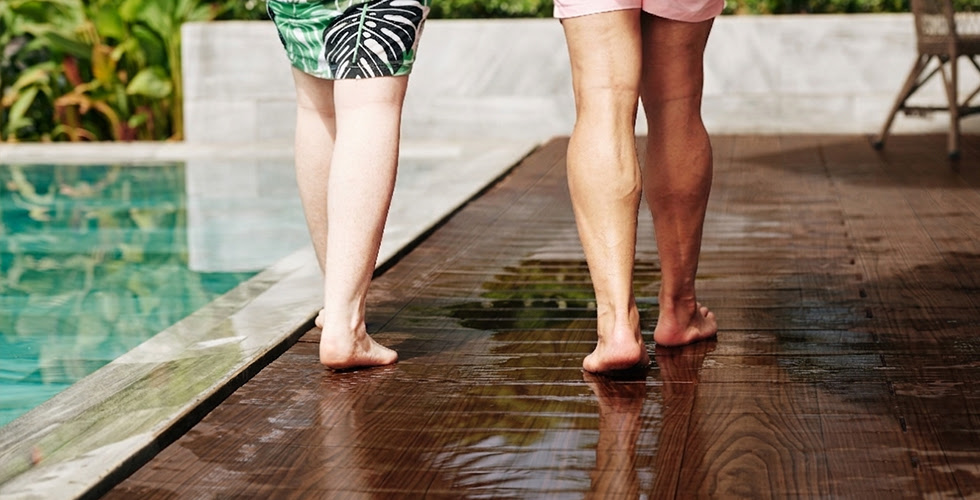
The difference between the two starts to matter when you push either one a little harder. A big family, some heavy furniture or just a deck that sees heavy use - that's where ipe pulls ahead. It was built for that level of wear.
For a more relaxed backyard setup, thermally modified ash holds up just fine with day-to-day use. Most homeowners aren't dragging iron furniture across their deck every weekend, and for normal wear and tear, the difference in hardness almost never matters. It's a material with plenty going for it, and if how it looks or how easy it is to work with are part of your choice too, a softer hardness rating doesn't have to hold you back.
Which Wood Has a Cleaner Supply Chain
Ipe is one of the most heavy-duty hardwoods that you can put on a pool deck - it earns that reputation. The supply chain behind it has attracted a fair amount of scrutiny over the years, though. The ipe on the market has been linked to illegal logging operations in the Amazon, which makes it pretty hard to know what you're buying without looking into your supplier first.
Not all ipe is sourced irresponsibly - certified options are out there, and some suppliers put in the effort to verify that their wood comes from legal and well-managed forests. The tough part is that verification takes some actual legwork on your part, and even certified ipe can be hard to trace with full confidence.
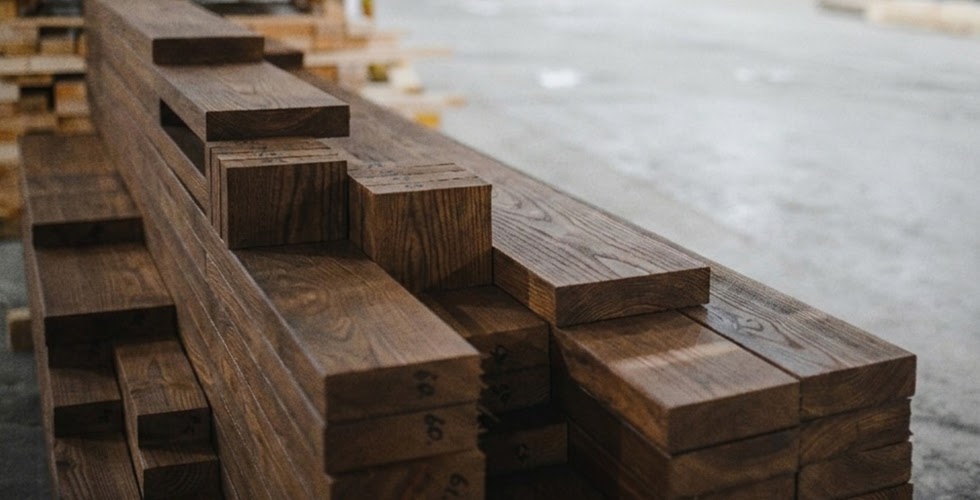
Thermally modified ash is a much easier situation on this front. Most of it comes from managed forests in North America or Europe (forestry standards are stricter and the supply chain is shorter), and it's much easier to trace from start to finish. If where your decking actually came from matters to you, that level of transparency is hard to put a price on.
Neither option is perfect from an environmental standpoint - wood harvesting carries some level of footprint, no matter where it comes from. Thermally modified ash does give you a cleaner way to confirm responsible sourcing, though. Most suppliers will have the documentation ready to go pretty quickly. Ipe can get you to the same place. But it takes more legwork on your end to buy it. If where your wood comes from matters to you (and for plenty of buyers it does), the extra research is well worth factoring into your choice.
How Each Wood Takes a Finish
These two woods need to be oiled or sealed pretty regularly to hold onto their natural color. Without that, either one will fade to a silvery gray over time, which plenty of homeowners actually love. Most want to hold onto that warmer tone, though.
That's where the two products start to diverge. Thermally modified ash has a more open grain structure, so the finishes go on pretty evenly across the whole surface. Ipe is so dense that oils mostly just sit on top without soaking in much - and it can leave you with a blotchy or uneven finish if you haven't done the prep work.
None of that makes ipe impossible to finish well - a little extra prep work is just part of the deal. A light sanding pass or a dedicated wood cleaner before any oil goes down is what most applicators recommend. Some products are also a much better match for dense tropical hardwoods than others. Those uneven results usually trace back to that one skipped prep step.
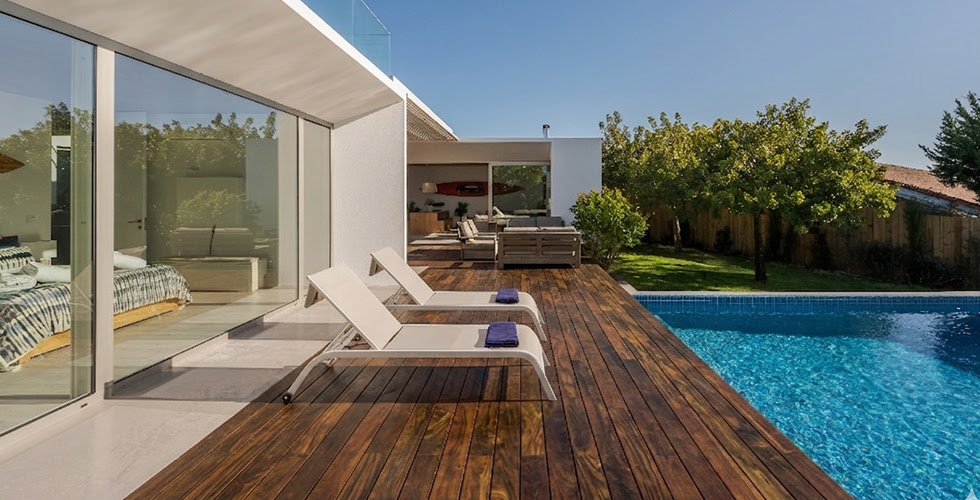
Thermally modified ash is a bit more forgiving in that regard. The finish goes on, and when it comes time to reapply, the process is just as easy. A pool deck already has plenty of factors working against it (non-stop water exposure, heavy foot traffic and so on), so any material that makes maintenance a bit easier is worth a look.
Either wood is still going to need some attention every year or two (and just how much will depend on sun exposure and how much moisture your deck sees), and neither one is a true set-it-and-forget-it material. The bigger difference between them is how much prep and effort each maintenance cycle takes. With ash, that process stays fairly predictable from one year to the next. Ipe is a better fit for homeowners who don't mind putting in a bit more work each time around. A quick annual refresh versus a full weekend project is a gap worth thinking through.
Which Wood is Right for Your Pool
At this point, both of these are options, and you can't go wrong. The better question is which one actually makes sense for your situation.
Dramatic seasonal swings (the kind where summers run hot and humid and winters turn cold and dry) put stress on dense hardwoods. Thermally modified ash works with that movement more reliably than most because the modification process leaves it far more dimensionally stable. Ipe is a tough and dense wood, which is part of why it's so popular, though that same density also works against it a bit when moisture levels fluctuate throughout the year.
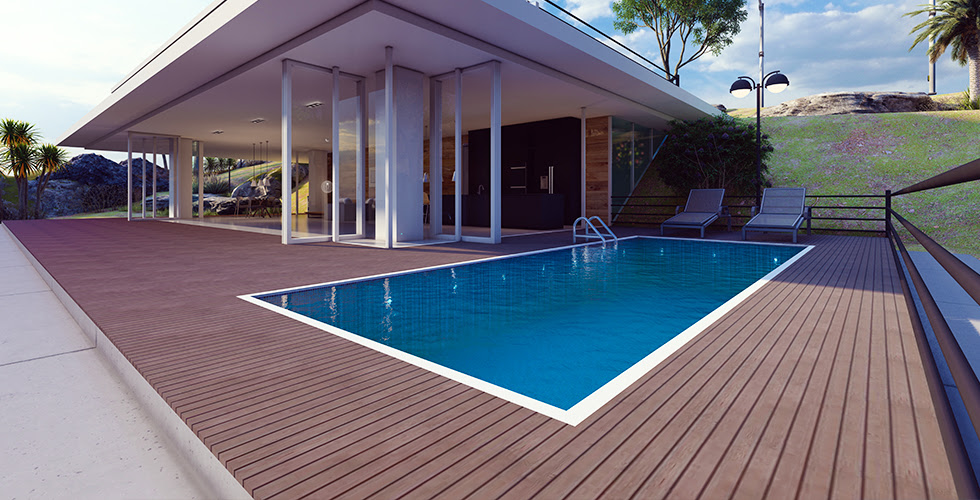
Maintenance is worth some attention as well. Ipe does take some genuine effort to maintain - we're talking about standard cleaning, periodic oiling and keeping up with it. Let it go long enough, and it'll slowly weather into a silver-gray patina, which some love the look of. Either way, though, it's a commitment. Thermally modified ash is a bit easier to live with on that front, and if low-maintenance is a priority for you, that could be what decides it.
The third factor here is sourcing. Ipe has a pretty messy history - not every supplier out there can verify where their wood came from or whether it was harvested responsibly. Thermally modified ash is a different story - it comes from North American or European forests, and there are usually records to back that up. For buyers, that level of traceability is a priority - and in my experience, the deeper you get into the buying process, the more it tends to matter.
Both of these woods will hold up just fine around a pool, as long as they're installed and maintained properly. The choice comes down more to what you care about - how much maintenance you're willing to take on, how extreme your local weather gets and how much the sourcing story behind the wood matters to you.
Build Something Extraordinary
When two options are this strong, that's actually a great problem to have - even if it doesn't always feel that way at the time. Both of these woods can hold up beautifully around a pool with the right installation and some care, so the question was never which one is better - but which one is the better fit for your situation. Your climate, your maintenance habits, your sourcing values and your budget are all going to pull in slightly different directions - it's a normal place to land.
Not everyone wants the same outcome from a pool deck. Anyone who needs the most rugged surface and doesn't mind a bit of work to keep it looking great will choose a different material than anyone who wants a beautiful deck that holds up more gracefully over the years. And both of them can walk away with a pool deck they're proud of - they just need different materials to get there.
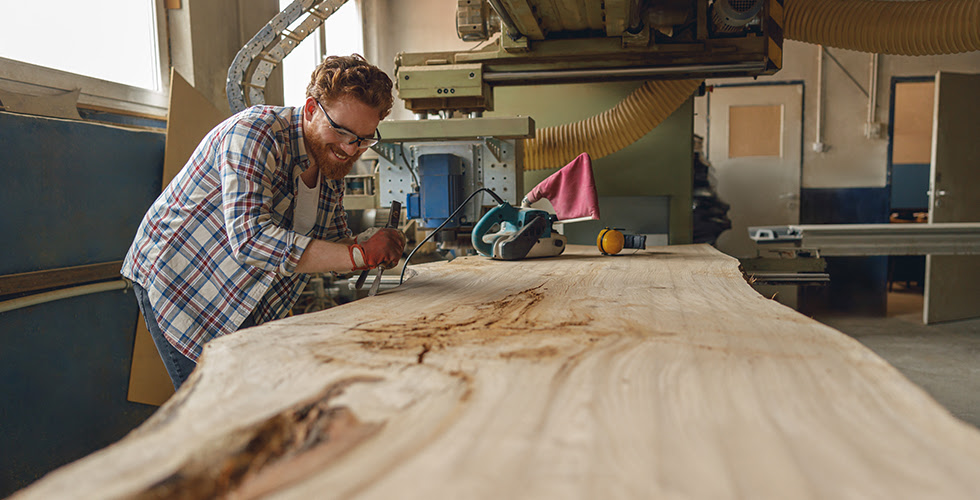
We built House of Hardwood for just this conversation - the right material in the right application and for the right reasons. With a wide set of premium decking options and a team that legitimately cares about the facts, we can take you from "I think I know what I want" to "I know exactly what I want and why."
Stop by the yard on Wellesley Ave to see the wood in person or give us a call - we'll be happy to talk you through what makes the most sense for your build.