
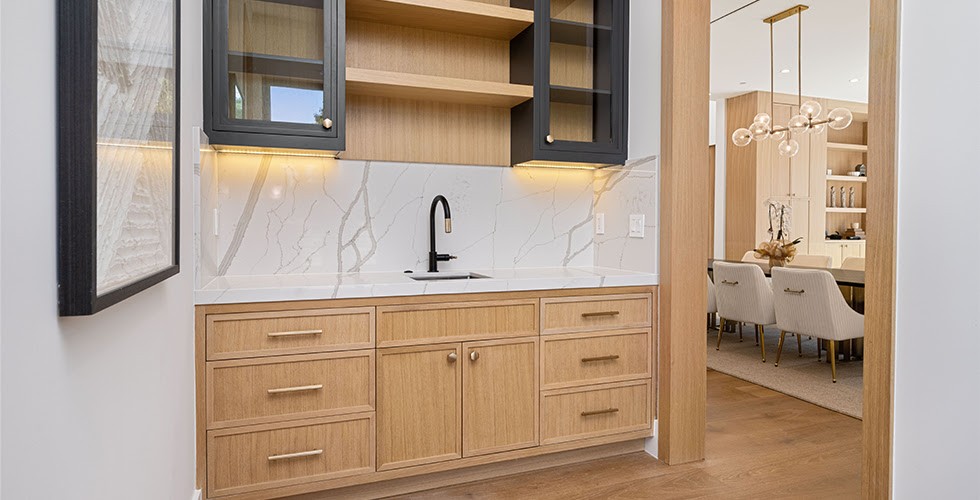
Lumber can look and feel dry on the surface and still carry enough moisture to cause actual problems after installation. Wood is hygroscopic by nature - it absorbs moisture from the air and releases it based on whatever environment it's been sitting in. A board that gets installed in a heated home at the wrong moisture content will start to move, and it won't settle until it matches the new surroundings. What makes this especially aggravating is that the whole process unfolds inside finished cabinets, where no one can see it happening.
Cabinet quality is locked in before the build ever starts. Long before the first cut is made and long before any of the hardware goes on or any finish gets applied, the lumber either has what it takes or it doesn't. A board that wasn't dried correctly will cause problems - the wood will expand and contract over time, and it'll eventually start to pull the whole piece apart from the inside. Stuck doors, gaps that just won't stop widening, and joints that start to separate are all pretty classic signs of a moisture problem that started well before installation.
Of all the places where I see a difference between the builders who know their trade and the ones who don't, kiln-dried lumber is near the top of the list. It's not a premium add-on or some optional upgrade - it's a baseline standard, and any good cabinet maker will treat it that way. As a homeowner, you have every right to ask about it before you sign anything, and it costs nothing to ask.
Hiring a builder who puts careful thought into lumber preparation is one of the best long-term investments that a homeowner can make. Cabinets that last for decades usually get this part right - and the ones that fail early almost never do.
Here is why kiln-dried lumber matters for custom cabinets!
What the Kiln Does to Your Lumber
Lumber goes through quite a bit before it ends up in your cabinets. One of the biggest steps along the way is pulling the moisture out of the wood - and the kiln is how that gets done right.
The process itself is fairly easy - the cut lumber goes into a large heated chamber, and a combination of controlled heat and airflow works through the space to draw the moisture out of the wood slowly and evenly over time. The end goal is to get the wood down to a steady moisture level in a way that's predictable and reliable throughout.
The process goes something like this - the large stacks of lumber get loaded into what is a big insulated room. From there, the temperature and the airflow inside get dialed in bit by bit over a set period of time. Nothing about the process is rushed, and nothing is left to chance.
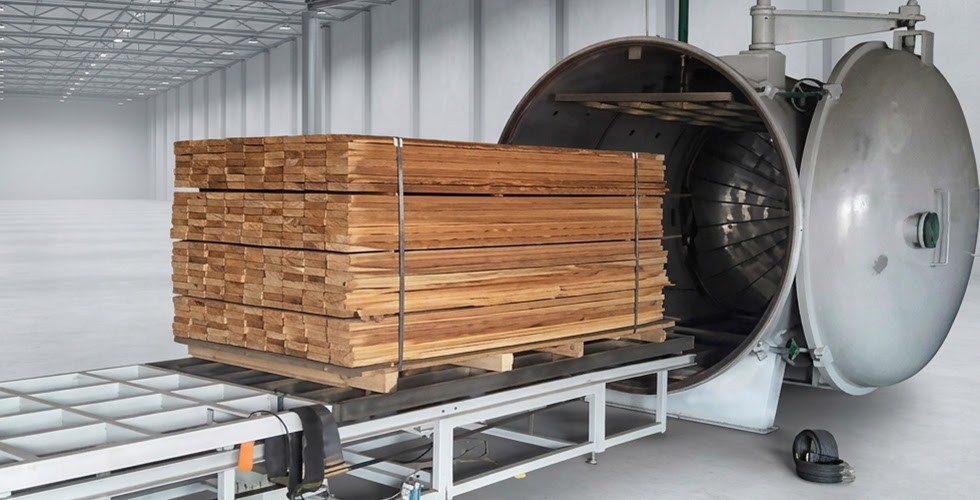
The older of the two methods is air drying - it's just lumber stacked outside or in an open shed, left to lose moisture on its own over time. The process can take anywhere from a few months to a few years, and the final results are very much at the mercy of whatever the weather does. With the kiln, manufacturers get results that are far more predictable and reliable because the entire environment is controlled from start to finish.
Wood that still has too much moisture in it will act erratically once it ends up as part of a finished piece. The whole point of the kiln process is to get the wood into a predictable state before it ever gets cut into something like a cabinet door or a drawer.
Why Dry Lumber Makes a Better Cabinet
For cabinetry, kiln-dried lumber needs to come in at a moisture content of around 6% to 8%.
Wood is a natural material, and it responds directly to the moisture in the air around it. As humidity rises, wood absorbs it and swells up. As humidity drops, it releases that moisture and pulls back. It's just what wood does, and it never stops - not even after it's been cut, shaped and built into something.
A 6-8% moisture level is the point at which the wood has already done most of its natural expansion and contraction on its own. At that level, there's very little moisture left for it to release once it ends up inside your home. For cabinet construction, that's something that matters quite a bit.
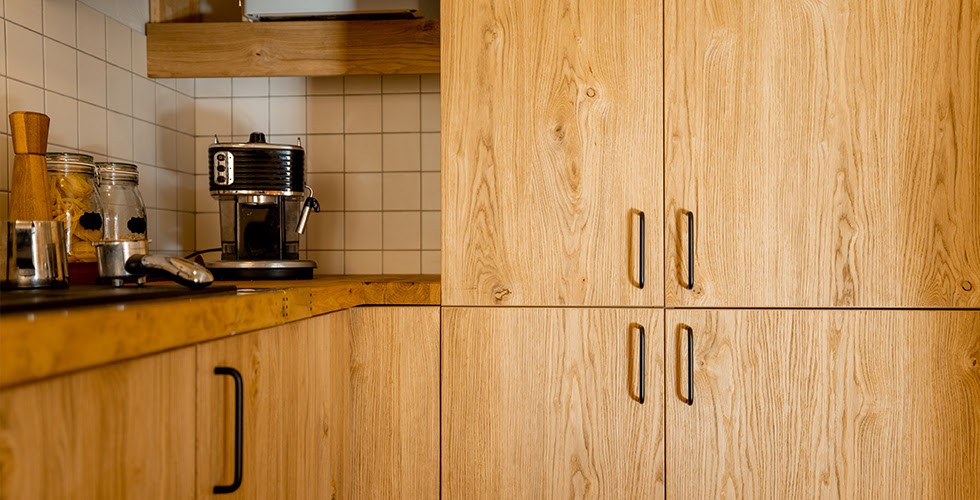
The starting moisture level matters a lot. If the lumber goes into a build at 12% or 15% moisture, it won't stop losing moisture just because the cabinets are finished and installed. Wood will always try to equalize with the air around it, and as it sheds that extra moisture over time, it shrinks - and the joints and cuts that were made at the higher moisture level are no longer going to sit where they were meant to. Gaps open up. The doors start to move.
The moisture content needs to be right before a build even starts - it's what separates a cabinet that holds together for decades from one that slowly works itself apart. It's also something I see derail otherwise very solid work. The woodworking itself was sound, but the lumber just wasn't ready.
What Wet Wood Does to Your Cabinets
Wood that gets installed with too much moisture in it will continue to dry out long after the job is done. All that water has to go somewhere, and as it works its way out, the wood moves right along with it - and a little movement here and there does add up pretty quickly.
Drawer fronts can warp enough to pull away from the face frame completely. Doors start to bind up or leave gaps at the corners. Joints (which need a snug fit to hold together well) can loosen and separate as the wood moves around over time. And none of these are small cosmetic problems either. They're actual functional failures that change how the cabinets work on a day-to-day basis.
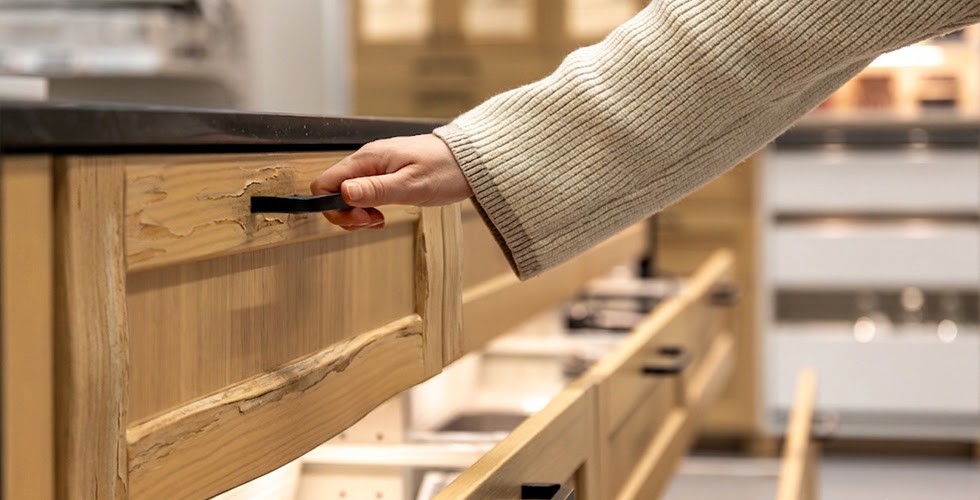
The timeline is the most frustrating part of all this. Most of these problems won't even show up for months after installation. A new kitchen can look nearly perfect well into fall - and then the furnace kicks on for the first time. The dry winter air starts to strip moisture out of the wood, and the wood starts to move.
You spend thousands of dollars on custom cabinetry (built specifically to fit your exact space), and by January, a gap has already crept open along one of the door panels. A carpenter can't tap that back into place either. Wood moves, and once it does, it's hardly ever going to go back to where it started. A hinge adjustment might stop a sticky door from nagging at you for a while. But it doesn't do anything about what's actually happening with the wood itself.
Those moisture content numbers from the previous section - that's where they start to matter in practice. Getting the moisture content right means your cabinetry holds its shape for decades. Getting it wrong means the whole project can start to fall apart well before the first year is even up.
Heat Kills the Bugs and Mold Inside
Wood-boring insects and mold spores can live pretty deep inside a board, and those high temperatures will kill the insects and active mold long before the wood ever makes it to your workshop.
For kitchen and bathroom cabinets specifically, that's a much bigger deal. Those two spaces like to run warmer and more humid than the rest of the house, and a warm and damp environment like that is almost an invitation for mold to take root and spread.
The mold in cabinets has a very annoying tendency to stay hidden - it can get into the wall of a cabinet and just sit there, out of sight, for years at a time. By the time it finally works its way to somewhere that you can see it, it's already had more than enough time to spread. At that point, you'd have to tear into finished and installed cabinetry - and that's as miserable a home repair as it gets.
On the regulatory side, the ISPM-15 standard calls for heat treatment (or an approved fumigation) of wood packaging material that crosses international borders. The whole point of that standard is to kill whatever could be inside the wood (insects, larvae and fungi) before it gets a chance to travel somewhere it doesn't belong. Cabinet lumber that goes through kiln-drying follows that exact same principle, just at the workshop level instead of at the scale of international freight.
From what I've seen, the cabinets that hold up best over a decade or two just about always started with well-dried and clean lumber. A cabinet built on wood that's already been through that heat process just has a stronger foundation from day one - and in a kitchen or bathroom where conditions stay damp and warm, that head start actually does matter.
What a Moisture Meter Can Tell You
Wood reacts pretty strongly to its environment, and a long stretch in a damp warehouse or in an open truck bed can undo that careful drying work. By the time a board gets to your builder's shop, it could have pulled in far more moisture than it ever should have. None of that will show up on a label. The wood can look fine on the surface, and you'd have no way of knowing there's a problem at all.
That's why a moisture meter deserves a place in every shop. It's a small handheld tool (nothing fancy about it), and it gives you a live reading of what's actually going on inside the wood at that very minute. Not what it was months ago at the mill. Right there in that shop on that day. Any cabinet builder who pulls one out before making cuts is doing the job the way it's meant to be done (it's a great sign for everything else that follows), and it also tells you something about how that builder thinks about their work in general.

One of the best questions you can ask any builder before you hire them is how they prep their wood before making a single cut. Don't make it feel like an interrogation - just bring it up casually and see what they say. A builder who checks the moisture content before the first cut knows how wood behaves in the real world, and in my experience, that attention tends to carry over into everything else they do.
Why Plywood Works Better Than Solid Lumber
Hardwood plywood for cabinet boxes is not a budget move or some corner-cutting shortcut - high-end cabinet shops use it, and you can see why. The material's strength comes from the way it's actually built. Multiple layers of wood are glued together, with each layer running perpendicular to the one before it. That alternating grain structure is what gives hardwood plywood its natural resistance to movement and warping, and it's something that lumber just can't replicate.
Even after kiln-drying, lumber never stops reacting to small differences in humidity. A cabinet box made from lumber has far more room to move, cup or pull away from its joints as the seasons change. Plywood, in that same environment, holds its shape more reliably - and after years of use, that difference between the two starts to show.
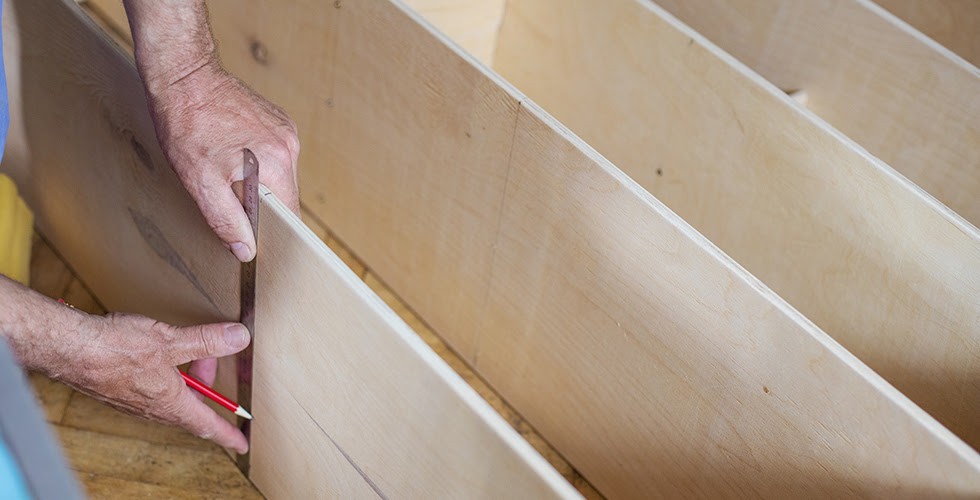
A skilled cabinet maker gets the most out of each material by placing it where it belongs. Natural wood earns its place in door frames, face frames and decorative elements - anywhere that its grain, character and appearance are the whole point. Plywood belongs inside the box structure itself, where long-term stability is what matters. One material takes care of how it looks, and the other carries the structural load - and when each one is in the right place, the whole cabinet just works the way it should.
Which material goes where (and why) is one of the details that I pay the most attention to in any build. A less experienced maker might default to the same material across every part of a project without thinking about what each component needs. With a more careful strategy, you pair each material to what the job needs from it. The end result is a cabinet that looks great on day one and stays tight, square and strong for years to come.
Build Something Extraordinary
The best cabinet work is almost invisible. When a drawer glides open without any effort and a door swings shut and sits nice and flush (with nothing moving around or binding now or two winters from now), that's never a coincidence. Most of it traces back to a material choice that had to be made long before the first cut.
Lumber preparation is a step that'll never make it into a before-and-after photo. But it can affect just about everything (how those cabinets feel, how well they hold up and how much you'll love the finished product years later). Wood that hasn't been dried well will move around a bit with the seasons, and in my experience, that's just what causes gaps, drawers that start to stick and doors that just won't close right.
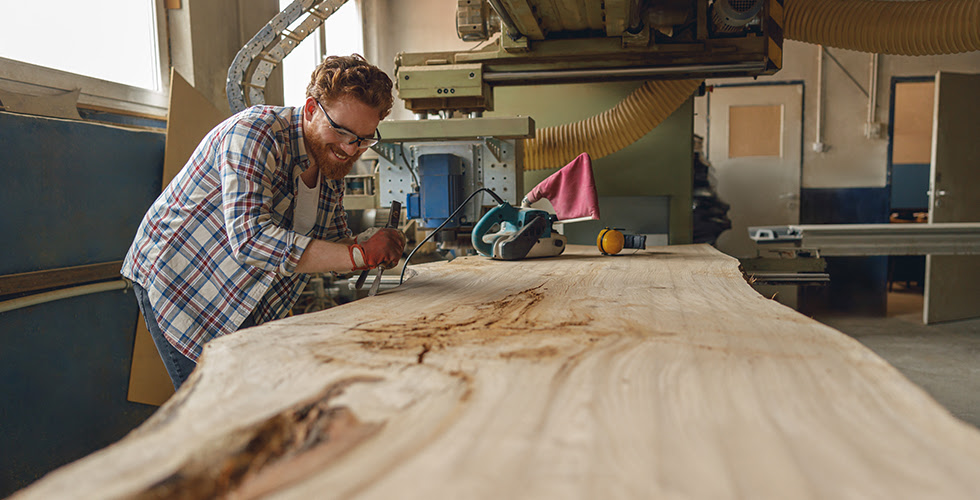
With that in mind, the right team from day one does matter. We carry a set of premium hardwoods that have been dried well, and our team loves to go through the project specifics with you and help you land on the right material before anything gets cut. Come by our yard on Wellesley Ave to see what we have in stock and get some real in-person help from the team that works with this material every day - or give us a call, and we'll take it from there.