
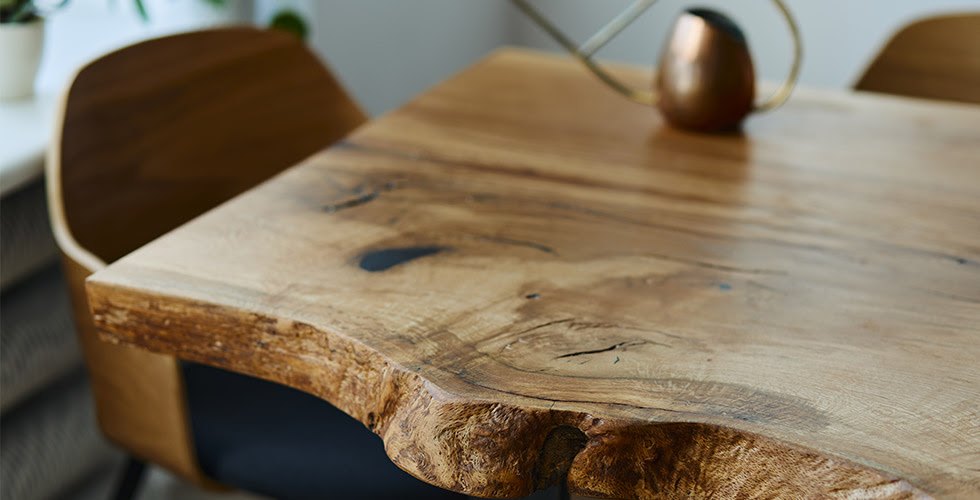
The right thickness for a live-edge dining table top seems pretty easy on paper - until you start to look into it. The range runs from roughly 1.5 to 3 inches, which does sound like a fairly narrow window. But there's plenty of room for doubt in there. A slab that ends up too thin can warp or sag over time, and one that's too thick can look heavy and awkward in the room - none of which you want to find out after dropping money on a piece. Anyone who lands on this topic has usually already found a slab they like or at least has a general direction in mind for the style they want.
The sticking point tends to be if that beautiful 2-inch walnut top will actually hold its own across the full span of a large dining table (or if a thinner slab would do the job just as well for less money) since the top carries structural weight in either case and a handful of variables will point you toward which direction makes more sense for your build. The wood species, table length, base design and visual proportions all pull the answer in different directions. A dense hardwood at 1.75 inches will perform very differently than a softer species would at the same thickness. The base design also plays a major role here.
A trestle base or a pair of sturdy legs positioned near the ends of the table gives you far more support than a pedestal-style base centered underneath. Going with a pedestal means that the tabletop itself carries more of the structural load. A longer table only makes that pressure worse. Get everything lined up correctly, and you're looking at a table that holds up for decades!
Let's find the right thickness for your live-edge dining table top!
How Thick Should Your Table Be
Most live-edge dining tables fall somewhere in the 1.5-to-3-inch thickness range - it's a pretty wide window. Where you land within it matters a lot once you start looking.
2 inches is the most popular option, and for a good reason. Day-to-day wear doesn't bother it much at all. It won't add unnecessary weight to the piece, and it comes in at a noticeably lower price point than the thicker slabs. That combination is pretty hard to beat.
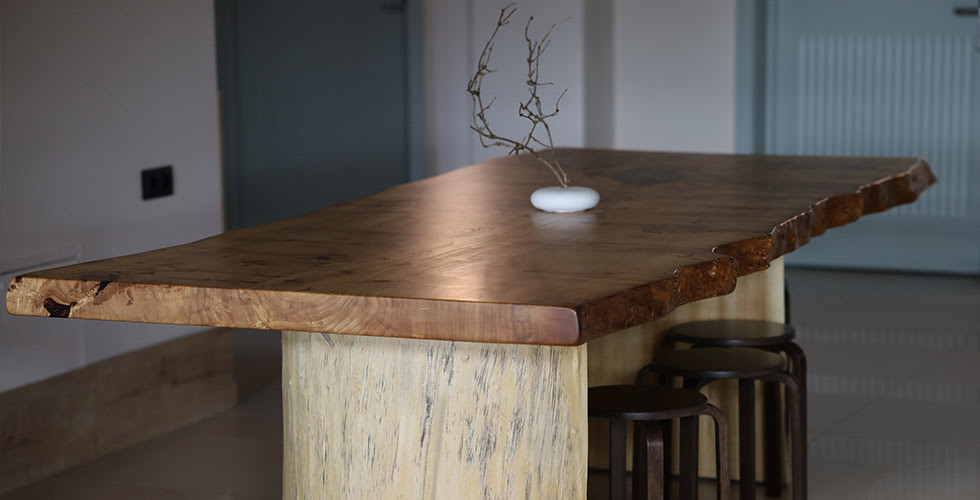
The right thickness for your table can depend on how you'll actually use it. A table that hosts big holiday gatherings and doubles as a homework station has very different needs than one that mostly just holds a centerpiece. The weight of what goes on it, how much day-to-day wear it's going to take and how much heavy use it sees - that should play into the thickness that you settle on.
A lighter household that hosts a dinner party every now and then will probably be just fine at 1.5 inches. A busier home (one with kids, lots of guests or a table that doubles as a workspace) will usually do better with something in the 2 to 2.5 inch range. Households in that second group are nearly always happier when they go a little thicker. No single right answer exists here - it just depends on what your day-to-day life looks like.
A thicker slab has a visual weight to it that can define how a room feels. Lots of homeowners love that big grounded look - the kind that makes a dining table feel like the centerpiece of the entire space. Others lean toward something a little sleeker and more refined. That works just as well. Neither direction is wrong - it just depends on your personal taste and the feel that your dining room already has.
A Longer Table Needs a Thicker Slab
Longer tables put considerably more stress on the wood. A slab that holds its shape fine at 5 or 6 feet will usually start to bow right down the middle if you push it out to 8 or 9 feet.
Single-slab designs are the most vulnerable to this. With no center support underneath it, the wood has to hold itself up across the full span all on its own - and after a few years, a thin slab will pretty reliably start to give out.
Any table over 7 feet long calls for a slab that's a bit thicker than the standard range. A thickness of around 2.5 to 3 inches gives the wood enough mass to stay flat over time and manage use just fine.
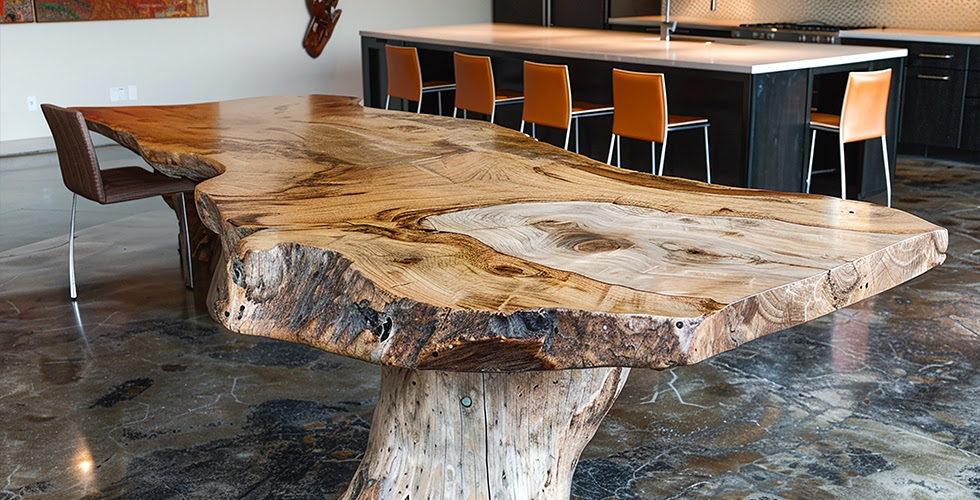
A long dining table is actually one of the better examples of this stress load. The weight of the dishes, the pressure of guests who lean in during a conversation and years of holiday gatherings - it all builds up across the full length of the table, day after day. A slab that started at 1.5 inches can develop a slight bow right down the middle after a few years, and once it does, there's not much that you can do about it. A thicker slab from the start is the better call.
A well-built base with well-placed legs can take a fair amount of pressure off the slab, and a solid one is well worth the cost - it does help. That said, the base can only carry weight. With a longer table, the thickness of the slab does most of the work in the end. The base is there to support it, of course. But the slab has to be strong enough to hold its own weight first.
How Wood Species and Thickness Work Together
Wood species has a big effect on slab thickness, and it's worth some thought early on - before you go too far into the buying process. Two slabs measured at the exact same thickness can seem very different under your hand. That has everything to do with how dense the wood is.
Denser hardwoods like walnut and maple are already tough by nature - they hold up against dents and surface wear well on their own. A top milled at 1.75 inches from either of those species will hold up to use without much unnecessary bulk, because the wood itself is dense enough to manage it. With those species, there's no actual need to go thicker just to get a top that lasts.
Softer or more open-grained species are a whole other situation. Woods like pine or butternut are lighter and more porous, so they pick up scratches and dents quite a bit more over time. With those species, a bit of extra thickness helps to make up for that - it gives the top more material to wear through before any of that damage actually starts to show.
That point matters before you commit to a particular slab. A softer wood at 1.5 inches looks beautiful in the shop. But put it on a dining table with heavy use, and it'll start to show wear before long. A thicker cut (2 inches or more) can add quite a few extra years to how well the surface holds up. It's a tradeoff worth resolving before you settle on a slab. The species that you choose and the thickness that you settle on do work together, and those two decisions help in the long run.
How Your Table Base Affects the Thickness
The style of base that you choose has an effect on how thick your tabletop needs to be, and it's something that you can miss until it's too late. Hairpin legs and slim metal frames are intentionally light and open, so a base like that does need a weighty slab above it to feel grounded. Without enough visual weight on top, the whole table winds up looking a little flimsy - almost like the top hovers there with nothing holding it down. A thin top with a delicate base is one of the most common proportioning mistakes I come across, and the upside is that it's a pretty easy fix as long as you know what to watch for.
On the other end of that range, a heavy trestle base or a wood-focused base already brings presence to the room all on its own. With a base like that, a top in the 1.5 to 2 inch range tends to work well - the base is already carrying most of the visual weight, so the top doesn't need to compete with it. A slightly thicker top can work too, but that can just depend on how strong you want the finished piece to feel.
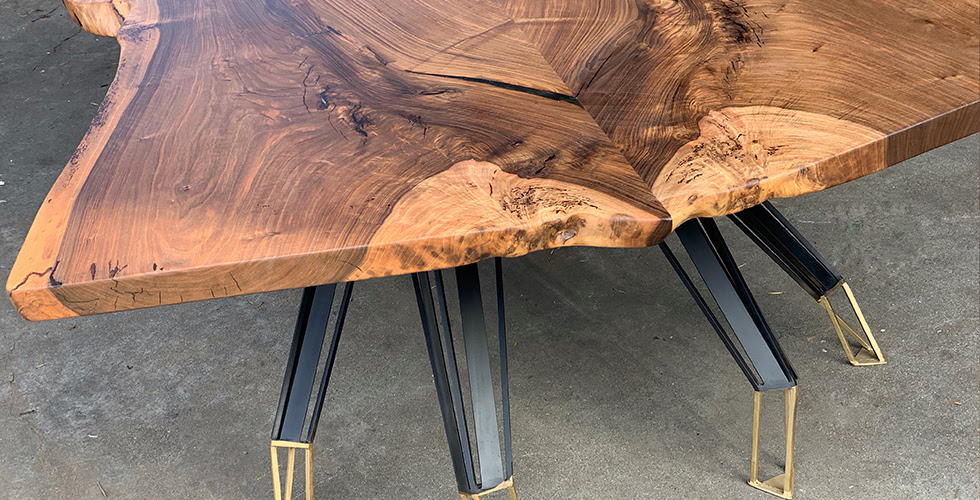
The base and the top of any table have a relationship between them. When one of them is strong and heavy, the other needs to pull back a bit and give the eye somewhere to rest. An understated base means the top has to step up and carry more of the visual weight in the room. Live-edge slabs already bring natural character on their own - and the balance between these two elements is what separates a piece that feels deliberate and put-together from one that just looks like a random bunch of parts that happened to be in the same room together. If you're thinking beyond just a tabletop, that same sense of proportion carries through to wood bookcases and built-ins where the relationship between structure and mass matters just as much.
How to Get the Visual Proportions Right
Even with a great base-and-top pairing, the slab thickness still plays a big part in how the whole table sits in a room. Numbers that look right on paper (or in photos) don't always translate to how a top actually reads once it's placed in the space. Usually, it's a visual weight problem.
Thicker slabs (somewhere in the 2 to 3 inch range) pull your attention and give a table some visual weight. In a bigger dining room, that extra mass is what keeps a piece from feeling like an afterthought. A thinner top in the same space tends to get a little lost, and the whole table winds up looking underbuilt for the room.
Proportion is the basis of all this. A table that looks and feels right when you walk into a room usually gets there the same way - the thickness of the top is in harmony with the height, the width and the scale of the space around it. No single part should overpower the others - the whole piece just needs to feel balanced.
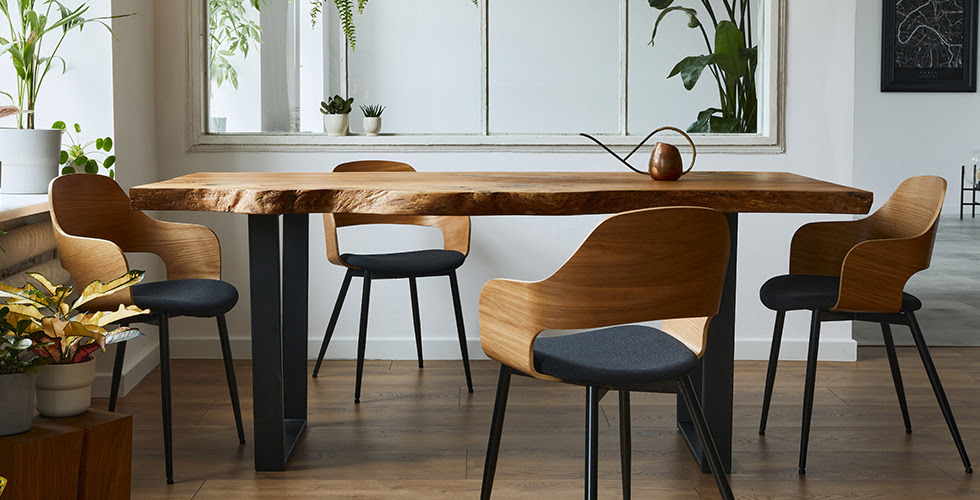
Before you lock anything in, look at the room as a whole. Consider how large the dining space is and what the ceiling height is. Think about whether the rest of the furniture runs on the heavier side or the more minimal side. These are worth working through before you settle on a thickness - and from what I've seen, it's usually the one step that gets skipped.
A slab that looks striking in a warehouse-style loft with high ceilings and a wide open floor space can come across as overdone and heavy in a more intimate room. The same exact piece can read very differently based on where it ends up - it's why the room itself plays a large part in the final call.
When a Thin Slab Is the Right Choice
Thicker slabs get most of the attention, and it's not hard to see why - they look strong, sturdy and confident on just about any table. A thinner top can be just as strong a choice in the right situation, and it tends to get a little unfairly underrated.
A slab around 1.5 inches thick is a great option for a smaller table or for any space that doesn't see a whole lot of heavy use. The base of your table is carrying most of the visual weight. A well-built base works with that weight all on its own, so the top doesn't need to be as thick for the whole table to still feel sturdy and grounded. A heavy base pairs better with a leaner top - they work well together, and the whole look ends up feeling balanced instead of overdone.
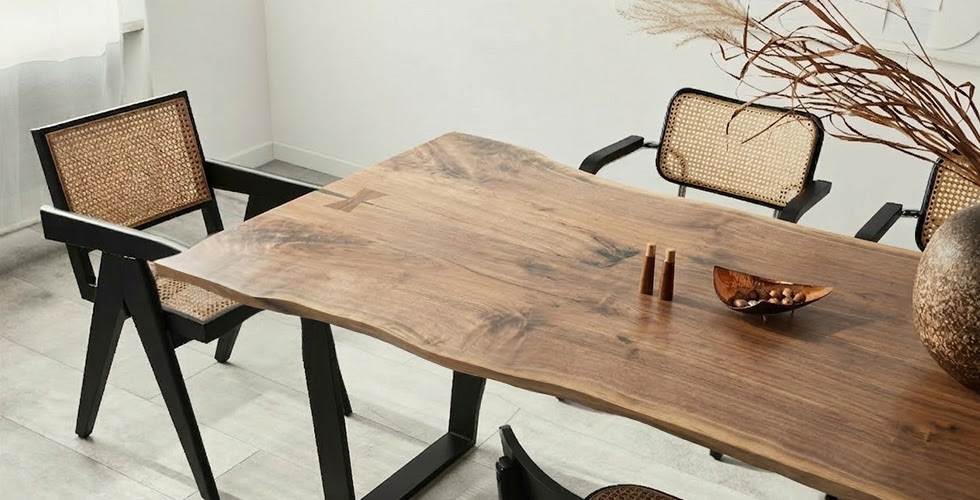
Budget is another valid reason to go thinner, and it's worth bringing up. Thicker slabs cost more, and those extra inches add up faster once you're looking at the final pricing. A 1.5-inch slab in a dense hardwood like maple or white oak will still hold up beautifully for years, and nobody's going to look at it and think the quality is lacking.
What actually matters is matching the slab to the scale of the table, to the needs of the space and the whole design of the base. A thinner slab that was chosen with that in mind will usually outperform a thicker one that was just picked without much thought. The fit between the top and the base is what makes or breaks a table. A 1.5-inch slab on the right base tends to look and feel far more intentional than a flashy slab dropped onto something that doesn't suit it. Proportions matter more than thickness ever will, and once you start seeing tables that way, it's hard to go back.
How the Wrong Thickness Can Cost You Later
Even with the right information in hand, there are still a few places where it can go wrong. The most common one is picking a thickness based on how it looks in a photo instead of what it needs to hold up across a longer span. A slab that holds up just fine at 5 feet can start to flex and warp by the time that you push it to 8 - it's usually a thickness problem (not a material problem).
The wood species that you choose will have a bigger effect on thickness than almost anything else in this process. A more porous wood actually needs extra thickness to hold its shape over time - a dense hardwood of the same dimensions just doesn't have that same problem. Getting this part wrong could leave you with a table that looks perfect on day one, only to start warping and moving within a year or two.
The base is the other piece that tends to get missed. A heavy slab should have a base that can support it - if that base is too light or poorly braced, it puts stress on the whole structure, and any problems that follow from that aren't related to the wood quality itself.
One more detail to keep in mind - a long table won't always show signs of warping immediately. Buyers won't even see it until after their first full year of seasonal changes has passed, and by then the slab is already set, sealed and finished. It's a very frustrating place to be in, and it's very avoidable if you just go with the right thickness from the start.
The next section ties this together and points you toward a path forward on your call.
Build Something Extraordinary
With that in mind, the right information is only part of the picture (you also need access to quality wood and to those who know it well), and that's where we come in. At House of Hardwood, we've spent years alongside homeowners, contractors and designers to help them land on the right slab for their projects, and it's one of my favorite parts of the job.
We also know that it can depend on the in-person experience. You'll have to see the grain, feel the weight and see how a piece will actually look in a space once installed - it's something that you can't get from a photo.
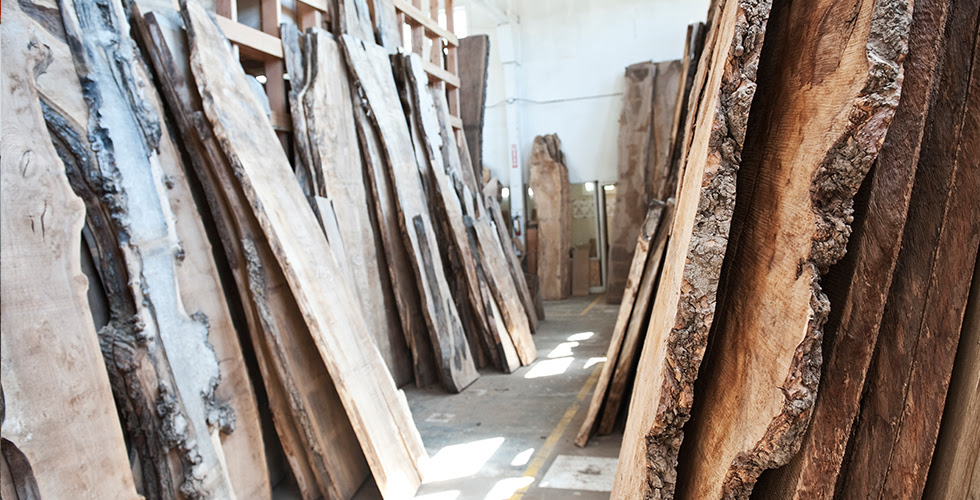
Part of what makes that process work is that we keep a wide selection on hand. We carry live edge slabs, hardwood lumber and specialty pieces that are harder to find at a standard lumber yard. Our inventory turns over pretty quickly, so there's always something new to look at. That also means if you come in with a general idea but no firm direction, we can usually show you a few options that might point you somewhere that you hadn't considered.
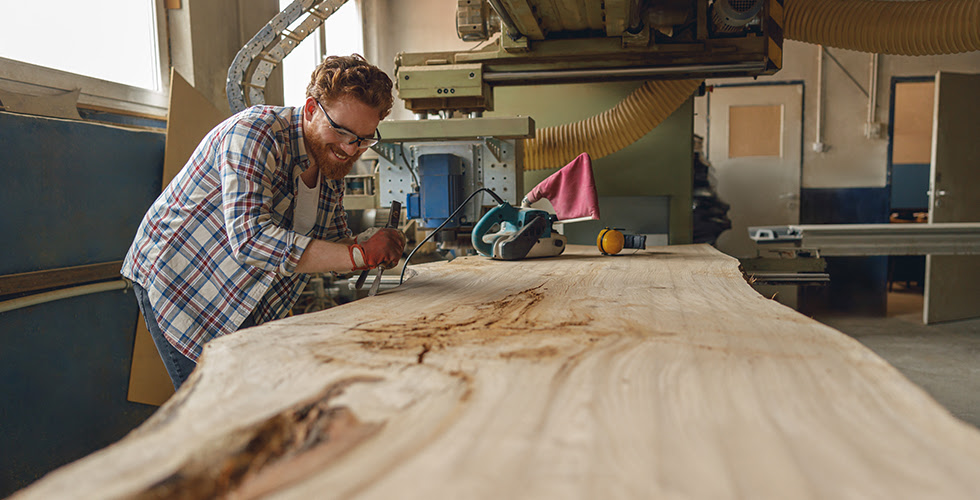
Whether you're still weighing your options or are already ready to choose something, we'd love to show you what we have out in the yard and make sure that you feel comfortable with whichever direction you go. There's no pressure (some come in just to look around and get a feel for what's available), and that's fine with us.
Stop by our location on Wellesley Ave or give us a call - we're always happy to talk about wood, answer questions or just help you think through what makes sense for your project. Whatever stage you're at, we're here.