
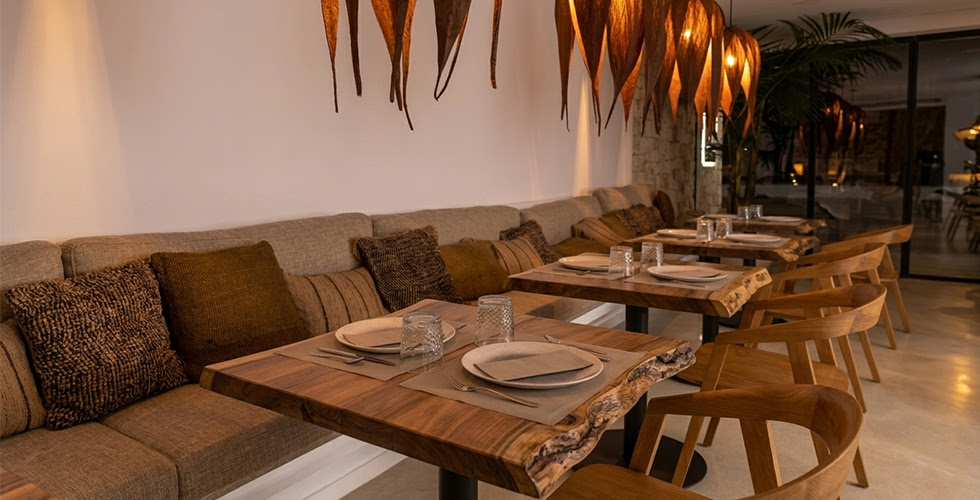
A live-edge tabletop can make or break the entire look and feel of a restaurant's interior. What started as a boutique choice has grown into a design staple - and with that, more first-time restaurant owners are now working through the choice without much help.
The product side of it can get tough very fast. With the wood species, price points and durability ratings to sort through, it doesn't take much to get stuck before you've even picked up the phone to call a supplier. A tabletop that photographs beautifully on day one but starts to warp, stain or dent within a year is a painful and expensive lesson - especially in a high-traffic restaurant where surfaces take a beating from plates, glasses, chemical cleaners and the steady wear and tear of day-to-day service, hour after hour.
The wood species choice matters just as much as the finish does, and the two do work together - whether you treat them that way or not. A great finish on the wrong species is still going to fall short at some point - it might just take a little longer to get there.
For a live-edge restaurant tabletop, the five species most worth your attention are black walnut, maple, white oak, cherry and elm. Each one has its own personality, its own physical properties and a very different price point. The right match between species and your restaurant's concept, foot traffic and budget is what separates a great long-term investment from a very beautiful (and very expensive) mistake.
Let's go through your wood options to find the right fit for your restaurant!
Why Live-Edge Wood Works Well in Restaurants
Restaurant tabletops take a beating. Heavy plates, hard surfaces and years of relentless day-to-day use will eventually wear down even well-maintained wood - and the species that you choose has to hold up over time. Live-edge slabs are cut out for that sort of punishment.
Still, you'll have to choose the right species for the job. The Janka hardness rating is a great place to start. The Janka test works by recording how much force it takes to press a small steel ball into a wood surface - the higher the number, the better that wood resists dents and scratches. For a restaurant, you want a rating of at least 1,000. That number should be one of the first details that you check before anything else.
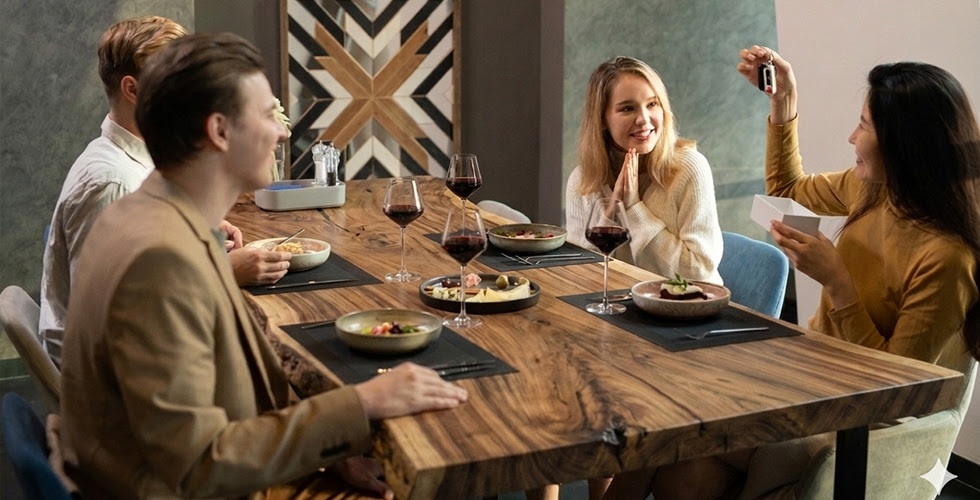
How they look is a big part of why live-edge tables have become so popular in restaurant design over the past few years. The edge is left natural and uncut, which means the table holds the original shape of the tree - its organic look has a way of drawing attention when a guest walks into a dining room. Plenty of restaurants will place one or two of them as feature tables for just that reason - and of course, not every seat in the house needs to have one.
That last point deserves a little extra attention on the budget side. Live-edge slabs can run anywhere from $50 to well over $500 per linear foot, which means a full dining room build-out can get expensive fast. A statement piece or two is usually the better move - you get the look that you're after without blowing your build budget, and in my experience, it tends to work well at just about every price point. Once the look is locked in, the next question is which wood species actually makes sense for a commercial setting - that's just what the first entry on this list covers.
Black Walnut Is the Most Popular Choice
Black walnut is the most popular wood species for restaurant tabletops, and it's pretty easy to see why. The deep chocolate-brown shades and the heavy grain patterns give it a look that feels refined and intentional - without much extra effort on anyone's part. Every slab also has its own markings and figure to it, so each table takes on its own personality instead of making the whole dining room feel like a furniture catalog.
On the durability front, black walnut holds up well in a busy restaurant. Its Janka hardness rating comes in at around 1,010 lbf, and that puts it in solid standing for restaurant use. In a working dining room, that translates to it taking on repeated contact, light scratches and the punishment that comes with a packed house that's running night after night. It's not the hardest wood on this list - but it's more than capable of keeping up with a full-service environment.
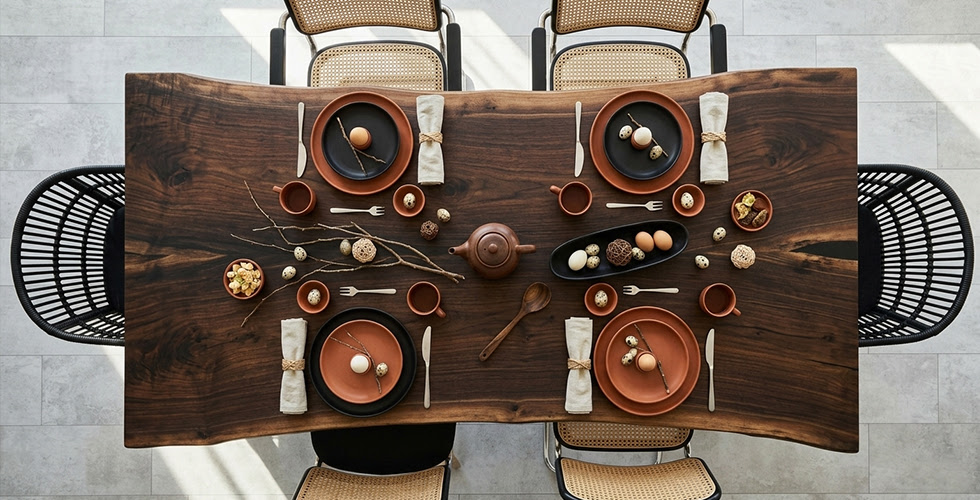
The main drawback with black walnut is the price - it sits at one of the higher price points in the live-edge market, and the gap starts to add up when you're outfitting a few tables at once. That said, the visual payoff is very real. A walnut tabletop photographs beautifully, holds its finish well over time and carries a weight and richness to it that cheaper materials just can't replicate for the guests. From what I've seen, it also ages well - the finish holds up, and the character of the wood actually deepens with time instead of fading out. The bigger question is whether that investment matches your restaurant's identity.
A high-end steakhouse or a moody cocktail bar will probably work well with walnut - it's a natural fit. A casual breakfast joint or a fast-casual concept would probably be better served by a less expensive wood that still looks great without the premium price tag. Maple is worth a close look for just that reason, and it's up next.
Maple Is Bright and Built to Last
Maple is one of the lighter-colored hardwoods that you can choose for a live-edge tabletop, and the color does matter in the room. A dark wood like black walnut in a smaller dining room (or one that doesn't get much natural light) can make the whole space feel heavier and more enclosed than it already is. Maple's pale coloring does the opposite - the room breathes a little better and feels more open and tends to read as bigger than it is.
Maple also has a well-earned reputation for durability. On the Janka scale (which is the wood industry's standard for measuring a wood's resistance to dents and surface wear), it ranks as one of the hardest domestic hardwoods available. For a restaurant that sees heavy day-to-day use and high table turnover, that level of hardness ends up being a strong long-term payoff.
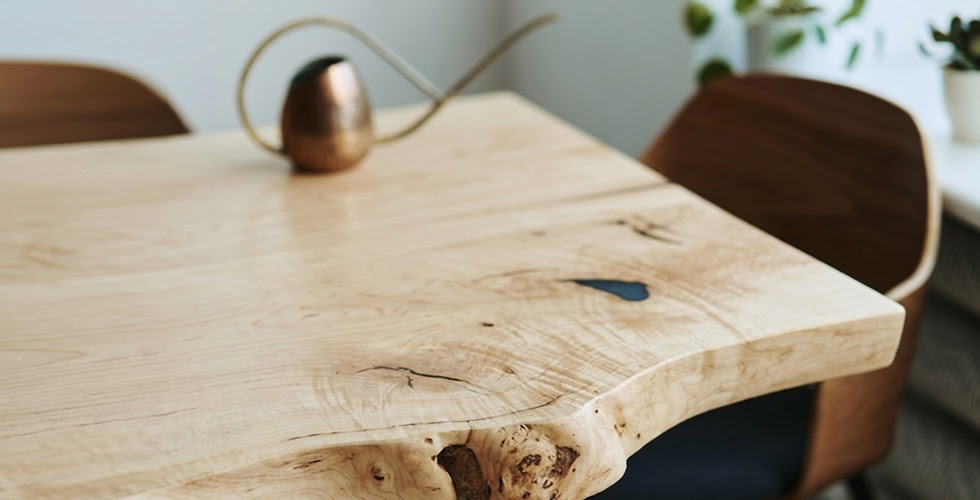
Maple's grain pattern is also worth mentioning. It runs much quieter and more uniformly than something like walnut or oak, and the subtlety is a big part of what makes it ideal for modern or minimalist dining rooms (where the table is there to complement the space around it and not steal the whole show).
The bigger question is what type of space you're actually working with. Maple tends to be a natural fit for restaurants with clean lines, neutral palettes and a lighter look and feel - Scandinavian-influenced bistros and modern farm-to-table concepts are two examples of this. And a dining room that already has plenty of richness from darker finishes or leather seating can be a great candidate for maple as well - a lighter wood slab can do quite a bit to bring some visual balance to the space. Before you land on anything, grab a few material samples and place them side by side to see how everything works together.
White Oak Holds Up to Moisture and Wear
White oak is arguably one of the most reliable woods a restaurant can use, and it earns its spot on this list. The grain is very tight, which makes it far more resistant to moisture than red oak ever will be. For a tabletop that spends all day under cold drinks and wet glasses, that natural resistance is worth having.
Furniture makers and barrel coopers have used it for hundreds of years, and the long track record does mean something. Wine and spirit barrels made from white oak can hold their contents for years and stay intact. A restaurant tabletop doesn't ask nearly as much from the wood, so if anything, a tabletop is probably the easier assignment.
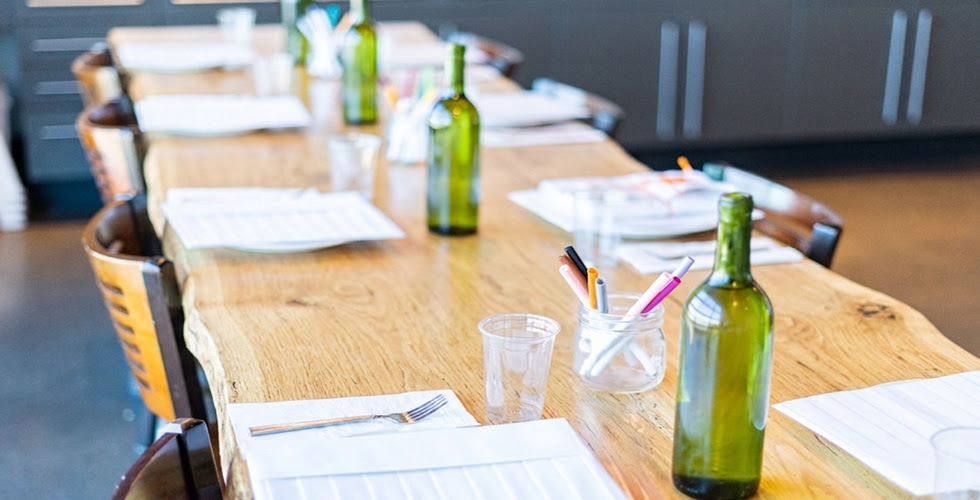
If your restaurant has outdoor seating that deals with humidity and temperature swings throughout the seasons, white oak is worth a close look. The same goes if your dining room sits right next to an open kitchen where steam and heat can build up during service. White oak holds up well in those environments because it resists the swelling and warping that moisture causes in other wood types.
The grain also gives white oak a defined look that runs tight and straight, with a cleaner and more uniform appearance compared to the wider and more open grain of red oak. The natural color shades fall into a warm amber-brown range that fits nicely across all kinds of restaurant styles (casual, upscale, rustic, modern, you name it). It also takes a finish well and tends to hold its look over time instead of going dull and flat. For a wood that needs to look great on day one and still hold up for years afterward, white oak is one of the more reliable options on this list.
Cherry Wood Gets Darker Over Time
Cherry wood does something that most other wood species on this list just don't - it changes color over time. As it gets more light exposure, it slowly deepens and warms up in tone, so a cherry tabletop at the five-year mark will look noticeably deeper than it did on the day it was first installed.
Not every restaurant will love that quality, and it's worth keeping in mind. If your brand relies on a uniform look across every table, cherry wood can work against you. For upscale or intimate dining rooms where warmth and character are the whole point, it's very hard to beat. The aging process is the feature.
Cherry is a moderately hard wood with a fine grain that takes a finish well. The grain is fairly understated compared to other species. The appeal is all in the color - its reddish-brown tone just deepens and warms as it ages.
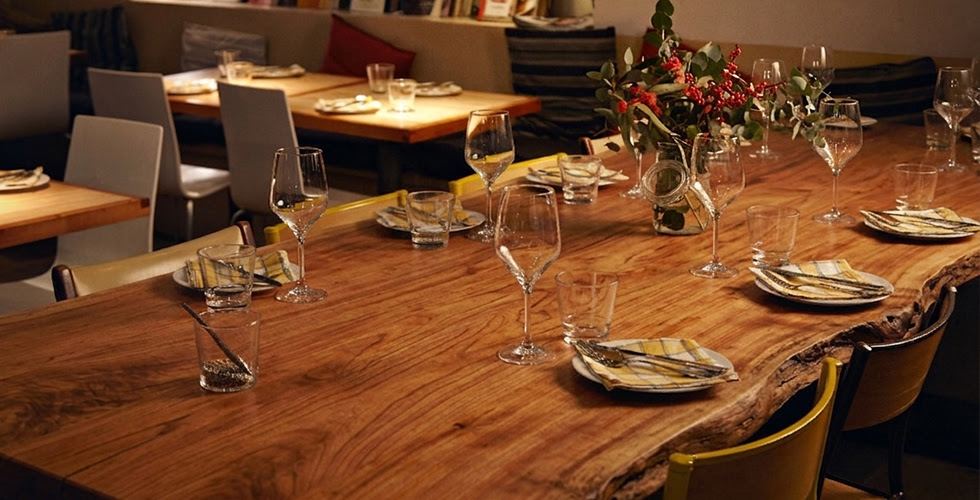
Some owners legitimately love the idea that their tables develop a little history right alongside the restaurant itself. A set of tabletops that visibly ages with the space feels lived-in and authentic in a way that's nearly impossible to fake - and for the right dining room, that's actually one of the stronger arguments that you'll find for the material.
That said, plenty of operators want their dining room to look just the same in year ten as it did on opening day. A steady visual identity matters quite a bit for a brand, and cherry wood can't quite give you that. The color change is slow and beautiful - but a change is still a change.
Cherry is a material that will ask you to commit - whether you want a space that ages and evolves alongside it or something that holds steady over time. Those are basic preferences, and neither one is wrong - it just helps to know where you land on that before the order goes in.
Elm Has a Grain Like No Other
Elm is one of those wood species that has a personality of its own. The grain doesn't run in a predictable line - it twists and interlocks on itself in a way that makes every slab look very different from the last. No two pieces will ever come out quite the same, and for restaurant tables especially, that natural variation is a big part of the appeal.
All that natural movement in the grain also usually brings voids, cracks and small hollow pockets along with it. Restaurant owners fill these in with epoxy resin - it can either be left untinted or tinted to match whatever color scheme they have in mind.
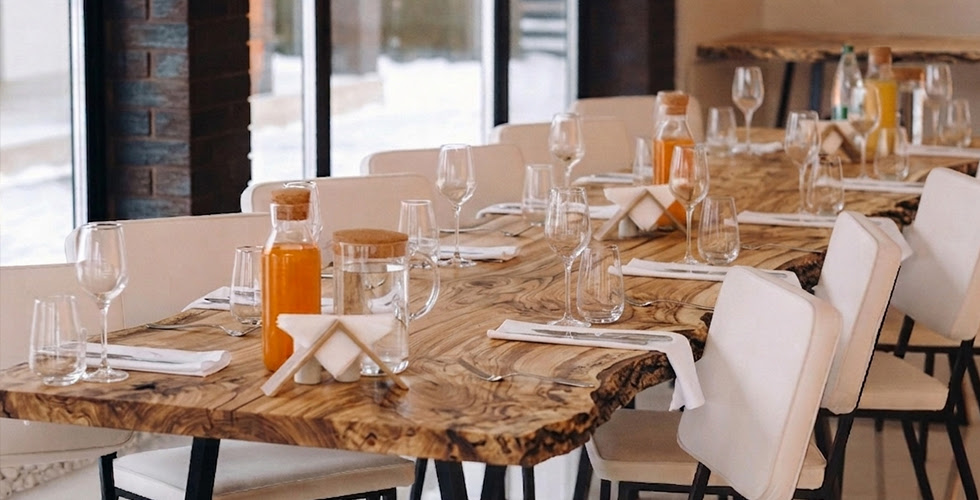
Elm works great in rustic or industrial spaces. Exposed brick walls, metal fixtures, worn leather furniture - elm is right at home in it. The unpredictable grain of the wood just belongs in that sort of environment, and it doesn't even need much help from the rest of the design to work.
Elm is also noticeably cheaper than walnut, and if you're outfitting a full dining room, that price gap really matters. A small difference per table piles up fast when you're ordering ten, fifteen or twenty pieces at once. Elm gives you actual visual results for the money - and for most restaurant owners, that combination is hard to argue with.
Build Something Extraordinary
Every species in this guide tells its own story - it's the whole point of putting them all together. Black walnut brings drama and depth to a space. Maple opens a room up with light lines. White oak works with tough conditions without complaint. Cherry rewards patience with a surface that just gets more beautiful as the years go on. Elm gives you something legitimately one of a kind. Each one lands a little differently, and a fair bit of that can depend on your restaurant's personality, how much day-to-day traffic your tables actually see and what your budget can realistically support.
The common thread across all five of these is that your wood and your finish do have to work as a team. A beautiful slab paired with a careless finish will wear down much faster than it should - and even a great finish applied over the wrong species for your conditions will still let you down eventually. Most projects that fall short get one of these two parts right - but not both. When these two decisions are made well, a live-edge table stops being a trendy buy and turns into something that your dining room is still proud of ten years later.
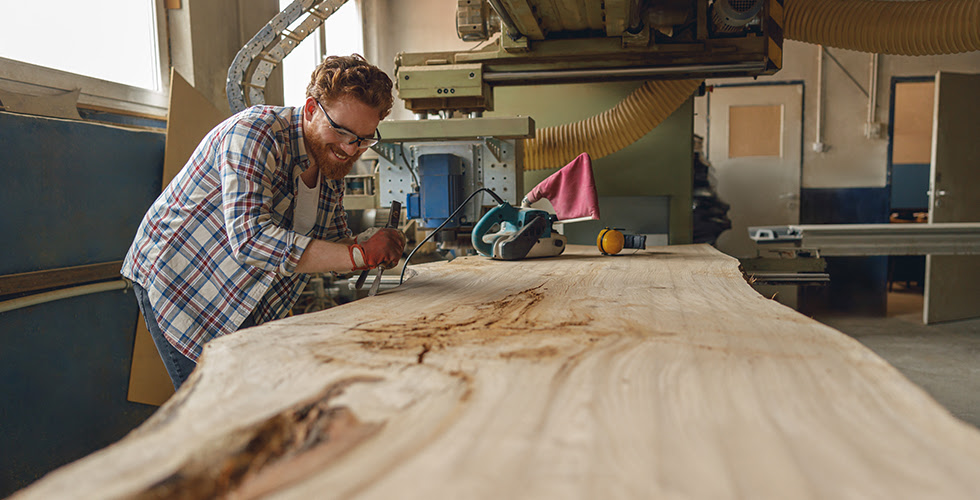
Once you're past the research phase and ready to get your hands on some slabs, House of Hardwood is a great place to start. We carry a wide set of live-edge pieces, and we give you an idea of the differences in person - and in my experience, that's the best way to choose. No write-up can replace standing in front of a slab and getting a feel for the grain, the weight and how a particular piece might look in your own space. Come stop by our yard on Wellesley Ave, or give us a call, and we'll help you find the right piece for your project.